目次 / Contents
1) 伝説 / Legend
A. 碑文 / Inscription
B. 日蓮と忍性 / Nichiren and Ninshō
2) 境内 / Precincts
3) 雨乞いの池 / Rainmaking Pond
A. 庭園風 / Garden Style
B. 沼風 / Marsh Style
1) 伝説 / Legend
A. 碑文 / Inscription
私と夫Rは、霊光寺 (鎌倉市七里ヶ浜1-14-5) を訪ねました。
霊光寺には、日蓮 (1222 - 1282) の伝説が残る
'雨乞いの池' : 田辺池 (タナベガイケ) があります。
このセクションでは、雨乞いの池について、前回のセクションが、霊光寺'です。
前回のセクション、下記。
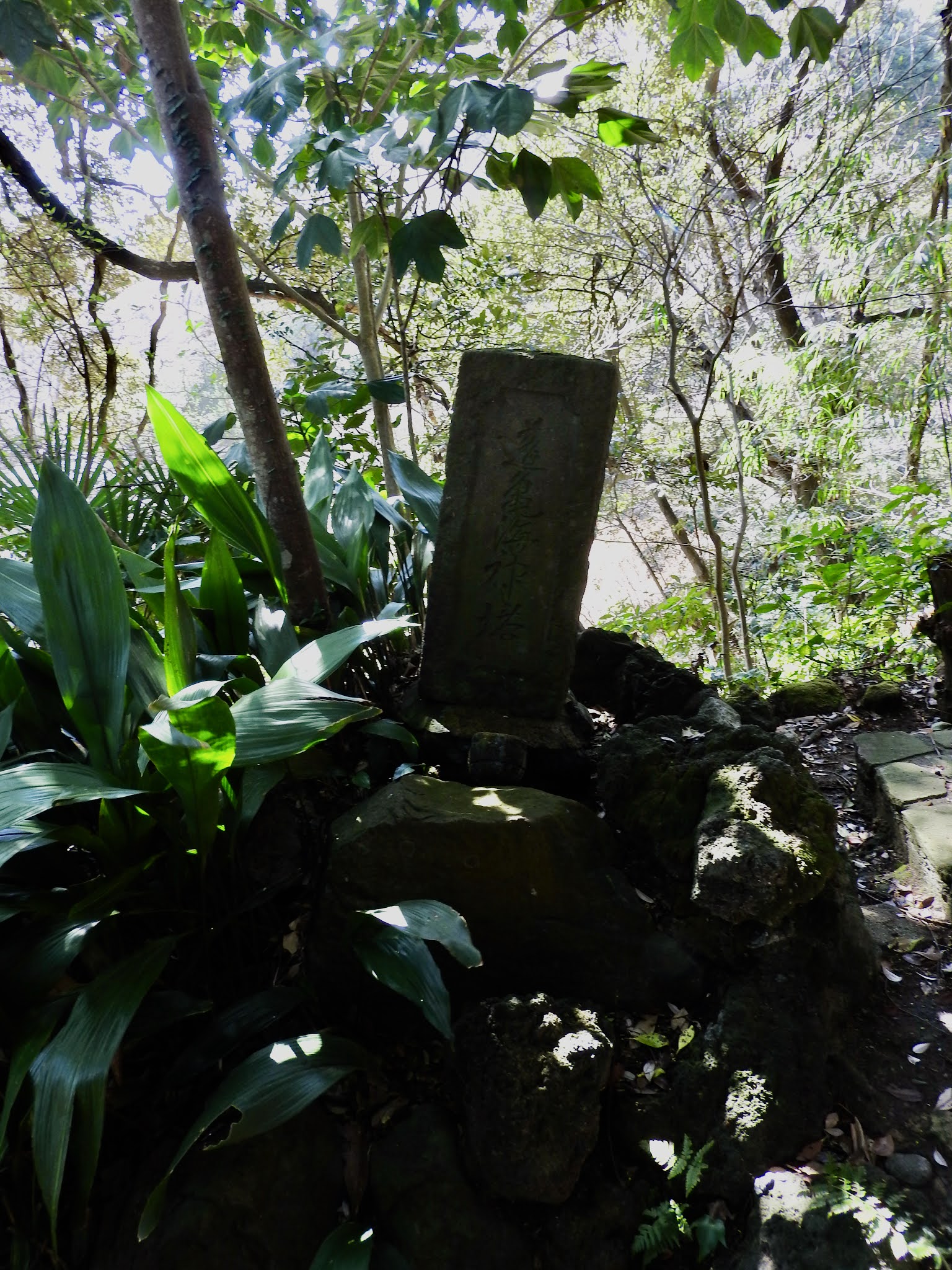
伝説は下の写真の碑文に示されています。
碑文には、
"古くから 「金洗沢かねあらいさわ」 と言われているのは、
此の池の辺である。
文永八年 (1271年) 六月、厳しい旱魃 (カンバツ) に襲われ、雨が降らなかった。
鎌倉幕府は、「良観房 忍性」に雨乞いの祈祷を命じたが、
その効果は得られなかった。
其の時、「日蓮」 が此の池の辺で、雨乞いの祈りをした。
忽ちに 恵みの雨が降り、大地を潤はした と言う。
世に 日蓮上人 雨乞いをした霊地は、此の地のことである。
昭和三十一年三月 建
鎌 倉 友 青 会"
と説明されています。詳しいことはここに書かれています→★。
 |
| 日蓮上人祈雨旧跡 1956 / 鎌倉友青会建立 霊光寺前の道に石碑はあります。 この石碑のシリーズは、鎌倉の史跡にの多くに見られます。 Priest Nichiren Prayer Rainmaiking Historic Site 1956 / Erected by Kamakura Yuseikai There is a stone monument on the road in front of Reikoji-Temple. This series of stone monuments can be found in many of Kamakura's historic sites. |
Inscription
I and my husband R visited Reikoji - Temple (1-14-5 Shichirigahama, Kamakura).
There is a Tanabegaike Pond : 'Rainmaking Pond' which has the legend of Saint Nichiren (1222 - 1282) who was a Japanese Buddhist priest and philosopher of the Kamakura period (1185 - 1333), who developed the teachings of Nichiren Buddhism, a branch school of Mahayana Buddhism : Nichiren-shū.
In this section, about 'Rainmaking Pond' the previous section is about Reikoji -Temple.
Previous Section, below.
The legend is shown in the inscription, above.
The inscription is written in Japanese as below.
"It is around this pond that has long been called "Kanearaisawa".
In June 1271, it was hit by a severe drought and it did not rain.
The Kamakura Shogunate ordered "Priest Ryōkan Ninshō" to pray for rain, but the effect was not obtained.
At that time, "Nichiren" prayed for rain near this pond.
It is said that the rain of grace fell and the earth was moistened.
The sacred place where Nichiren Shonin begged for rain in the world is this place.
Built in March 1952
Kamakura Yuseikai"
(More detail is here →★ only in Japanese)
B.日蓮と忍性 / Nichiren and Ninshō
言わずもがな、日蓮は、日蓮宗の宗祖です。
日蓮は、雨乞いをする前に、僧忍性 (ニンショウ/ 1217 - 1303) に
僧忍性は優れた方、名僧で、通称は良寛 (リョウカン) でした。
北条 時宗 (1251 - 1284 / 在職 : 1268 -1284)
が忍性に雨乞いを命じたのです。
これは伝説を史実と信じた場合ですが、'伝説'と言われる由縁は、
忍性側からすると日蓮に挑まれた "祈雨法くらべ" と "法論" は、相手にしなかったことになっています。(何が事実なのか?)
忍性は貧民やハンセン病患者など社会的弱者の救済に尽力し、彼らのための医療施設を創設しました。
忍性、極楽寺については下記。
[日蓮は迫害されているので、判官贔屓 (ハンガンビイキ / ホウガンビイキ) の日本人は日蓮の味方が多いのでしょう]
日蓮を信仰者の目で見ると素晴らしい人間性と力を持った先導者ですが、非信仰者にとっては、傲慢で辛辣な人間だったのだと思います。
仏敵には傲慢でありつつ、仏の道では気高く、自分の生活は質素な
日蓮は、確かに魅力的な宗教者です。
'雨乞いの池' は、日蓮の正当性を示す伝説の場所なのです。
これらの法難は、忍性らの画策によるという説があります。
こういう説が忍性を悪役にしてしまう1つの理由かもしれません。
滝ノ口刑場跡には、現在は、龍口寺 (リュウコウジ) があります。
龍口寺訪問については下記。
私は日蓮について詳しく知りませんが、今回のリサーチで、日蓮は
キリストを思わせました。
迫害されたことも共通点の1つです。
一方で、迫害されながらも日蓮は寿命をまっとうするところは、キリストとは違います。
 |
| 日蓮 『立正安国論 (リッショウアンコクロン)』(1260) を執筆し、 第5代執権、北条 時頼 (ホウジョウ トキヨリ / 1227 - 1263 / 在職 : 1246 - 1256) に提出しましたが、政治批判と解釈され、 時頼の怒りをかいました。 1261年に伊豆国に流罪され、1263年に赦免されました。 Nichiren although it was interpreted as a political criticism and made Tokiyori angry. Nichiren was exiled to Izu Province in 1261 and he was pardoned in 1263. officially a regent of the shogunate, from 1199 to 1333, during the Kamakura period :1185 or 1192 -1333.) 画像は下記より / This from below★ |
Nichiren and Ninshō
Nichiren is the founder of the Nichiren-shū.
It is said tha tNichiren would challenge the priest,
Ninshō (1217 - 1303) to "Compare Rainmaking Method" and "Buddhism Theory" before the rainmaking.
Ninshō was a great person as well as excellent priest and he was sometimes called Ryōkan (良観).
Since he was a great priest, Kamakura Shogunate 8th Shikken, Hōjō Tokimune (1251- 1284 / Ruler : 1268 -1284)
ordered Ninshō to pray for rain.
This is the case if the legend is believed to be a historical fact, but the reason why it is said to be a 'Legend' is that Ninshō refused to deal with Nichiren's challenge to Ninshō, "Compare Rainmaking Method" and "Buddhism Theory".
(What is the fact?)
Ninshō opened Gokurakuji - Temple in 1259.
Ninshō had been instrumental in helping vulnerable groups such as the poor and leprosy patients, and had created medical facilities for them.
About Ninshō and Gokurakuji - Temple, below.
The legend of rainmaking here shows that Nichiren's power of Buddhist dharma was superior to Ninsho, however, in reality
Nichiren was the son of a fisherman, and it is thought that he was able to determine and predict the weather.
Originally, Ninshō and Nichiren were not on good terms, and Ninshō is generally regarded as a villain.
(Since Nichiren had been persecuted, many Japanese tend to support the underdog, so they are on the side of Nichiren.)
Nichiren was tolerant and compassionate to those who have received his faith, but he was tough on different believers : Enemy of Buddhism
Looking at Nichiren from the perspective of a believer, he was
a leader with great humanity and power, but for non-believers, he was an arrogant and harsh person.
Nichiren, who was arrogant to Buddhist enemies, saintly on the Buddhism field and had a simple life, is certainly an attractive religionist.
Rainmaking Pond : Tanabegaike Pond is a legendary place that shows the legitimacy of Nichiren.
The victorious Nichiren caused the Persecution of Buddhists in Ryunoguchi (1271) and was about to be executed at the Tatsunokuchi Execution Grounds, but was saved by the light of a miracle.
After that, Nichiren was exiled to Sado Island which is an island located in the eastern part of the Sea of Japan, under the jurisdiction of Sado City, Niigata Prefecture.
There is a theory that these Persecutions of Buddhists were due to the scheming of Ninshō et al.
This theory may be one reason why Ninshō is considered the villain.
Currently, there is Ryūkōji - Temple at the site of Takinoguchi Execution Grounds.
About visit to Ryukoji -Temple, below.
I don't know much about Nichiren, but in this research, Nichiren reminded me of Christ.
Persecution was one thing in common.
On the other hand, Nichiren was different from Christ in that he lived his life despite being persecuted.
 |
| 忍性 今の価値観では善悪混合を行った方ですが 当時は自分の信じる道を彼なりに歩んだと 私は理解しています。 それは日蓮も同じですね。 Ninshō He did a mixture of good and bad things by our current values, but I understand that he followed the way he believed in at that time. It was the same with Nichiren, wasn't it? 画像は下記より/ This from below ★ |
2) 境内 / Precincts
 |
| 霊光寺の門 門はしまっていますが、右の外壁が切られて、 そこから自由に出入りできます。 Reikoji-Temple Gate The gate is closed, but the outer wall on the right is cut, and you can enter and exit freely from there. |
 |
| 門の並びに何かの建物があります。 建物の奥へ入ってゆくと雨乞いの池へゆくことができます。 池を眺めるだけでしたら境内へ入ることなく、 公道からできます。 There is a line of the gate and some buildings. If you go beside these buildings, you can go to the Rainmaking Pond. If you just want to look at the Pond, you can do it from the public road without entering the precincts.  |
 |
| 大きな盆栽? 秋には綺麗な紅葉が見られそう... Big Bonsai? I can see beautiful autumn leaves in autumn ... |
 |
| 龍 池と向かい合わせに龍の石塔があります。 Dragon There is a dragon stone monuments facing the pond.  石塔の裏 何か彫り込まれていますが私にはよく理解できません。 日蓮宗の宗祖、日蓮と八大龍王のことに 触れているように思います。 八大龍王は水の神様なので、この場所に適しています。 Back of Stone Monument Something is engraved, but I don't understand it well. I think it refers to Nichiren, the founders of Nichiren-shū and Eight Great Dragon Kings. The Eight Great Dragon Kings are the Gods of Water, so they are suitable for this place. |
 |
| 鉢から生まれているようなシュロ 初めてこんな形を見ます。 和の庭の形式の1つなのでしょうか? それとも庭師さんのアイディア? It is a palm that seems to be born from a pot. I see this shape for the first time. Is it one of the forms of Japanese garden? Or is it a gardener's idea? |
3) 雨乞いの池 / Rainmaking Pond
A. 庭園風 / Garden Style
 |
入り口付近から / From Near Entrance |
 |
| 池からの入り口付近 Views Near Entrance from Pond 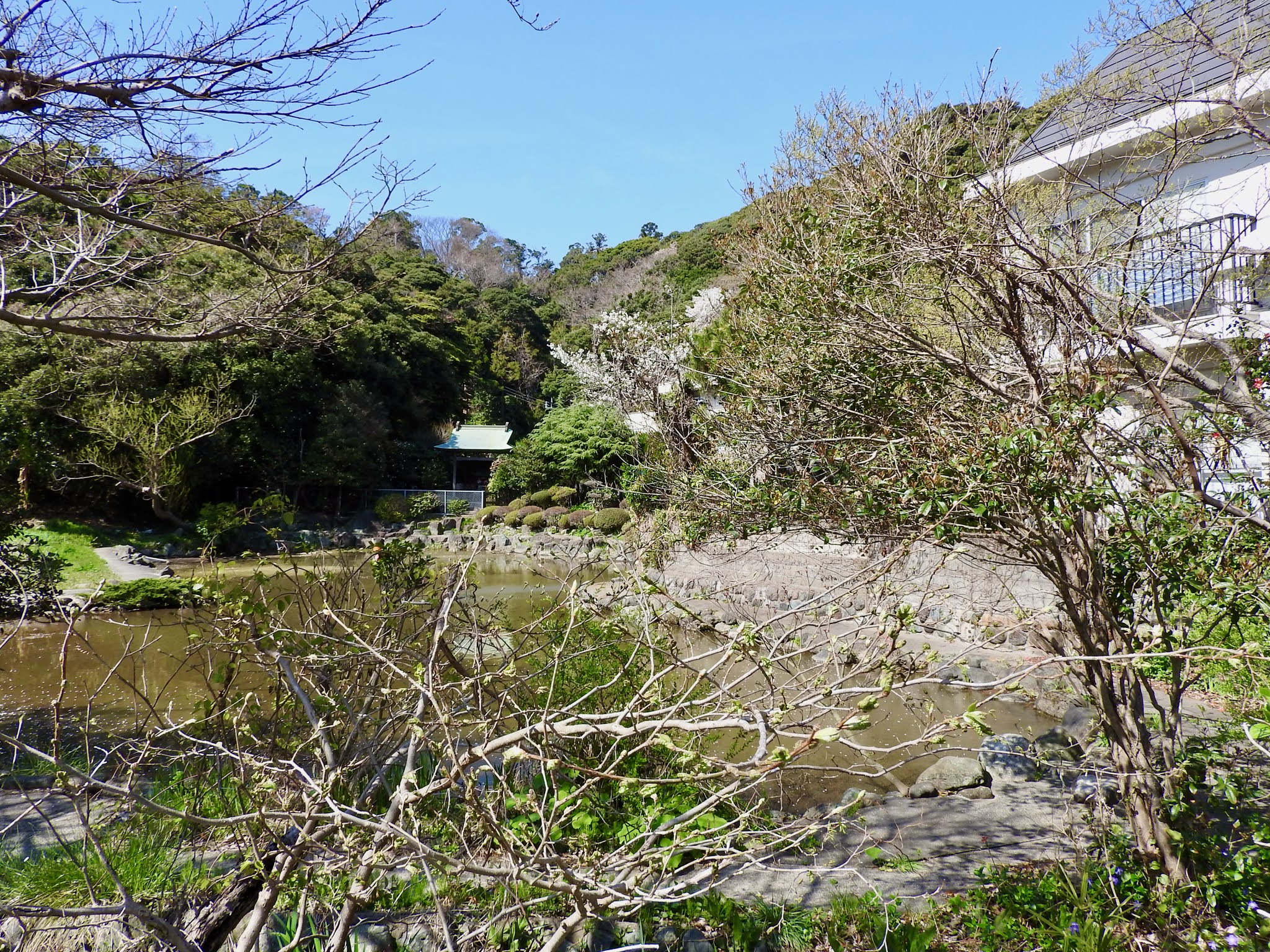 |
 |
| 八大龍王が祀られていると思います。 I think the Eight Great Dragon Kings are enshrined.  木彫の龍は1つです。 There is one wood carving dragon.  背景の山は鎌倉広町緑地です。 鎌倉広町緑地は、鎌倉市の南西部にある、 広さ約48ha (東京ドーム約10個分、480,000㎡) の 都市林です。 The mountain in the background is Kamakura Hiromachi Ryokuchi. Kamakura Hiromachi Ryokuchi is an 'Urban Forest' : 'Toshirin' with an area of about 48ha in the southwestern part of Kamakura. |
池は2つあり、1つは庭園の一部のように手入れがされ、もう1つは自然のままに残され、沼のような雰囲気です。
There are two ponds, one is groomed like part of a garden and the other is left untouched, giving it a marsh feel.
 |
| 私たちが訪ねたときは池の手入れを していらっしゃる方がいました。 やはり、ここは、池がメインになった 手入れをされる庭なのです。 When we visited, there was a person who was taking care of the pond. After all, this is a garden with a pond as the main feature which is maintained. |
 |
公道からの景色 / Views From Public Road |
 鎌倉広町緑地 |
鎌倉広町緑地の外周コースには、 '⑫雨乞いの池上'というポイントがあります。 私達は、3月15日に外周コースを歩いた時に、そこで、 '雨乞いの池' を知りました。 池から山を見上げ、あの中を歩いたのだな〜と 思いつつ、撮影しました。 Kamakura Hiromachi Ryokuchi There is a point called '⑫ Above Rainmaking Pond' on the outer course of Kamakura Hiromachi Ryokuchi. We found out about the 'Rainmaking Pond' when we walked the Outer Circumference Course on 15th of March. I looked up at the mountain from the pond and took a photograph while thinking that I had walked up there. 3月15日の外周コースは下記。 About the Outer Circumference Course, below. |

 |
| アメンボ アメンボをとてもとても久しぶりに見ました。 Water Striders I saw water striders for the first time in a long time. 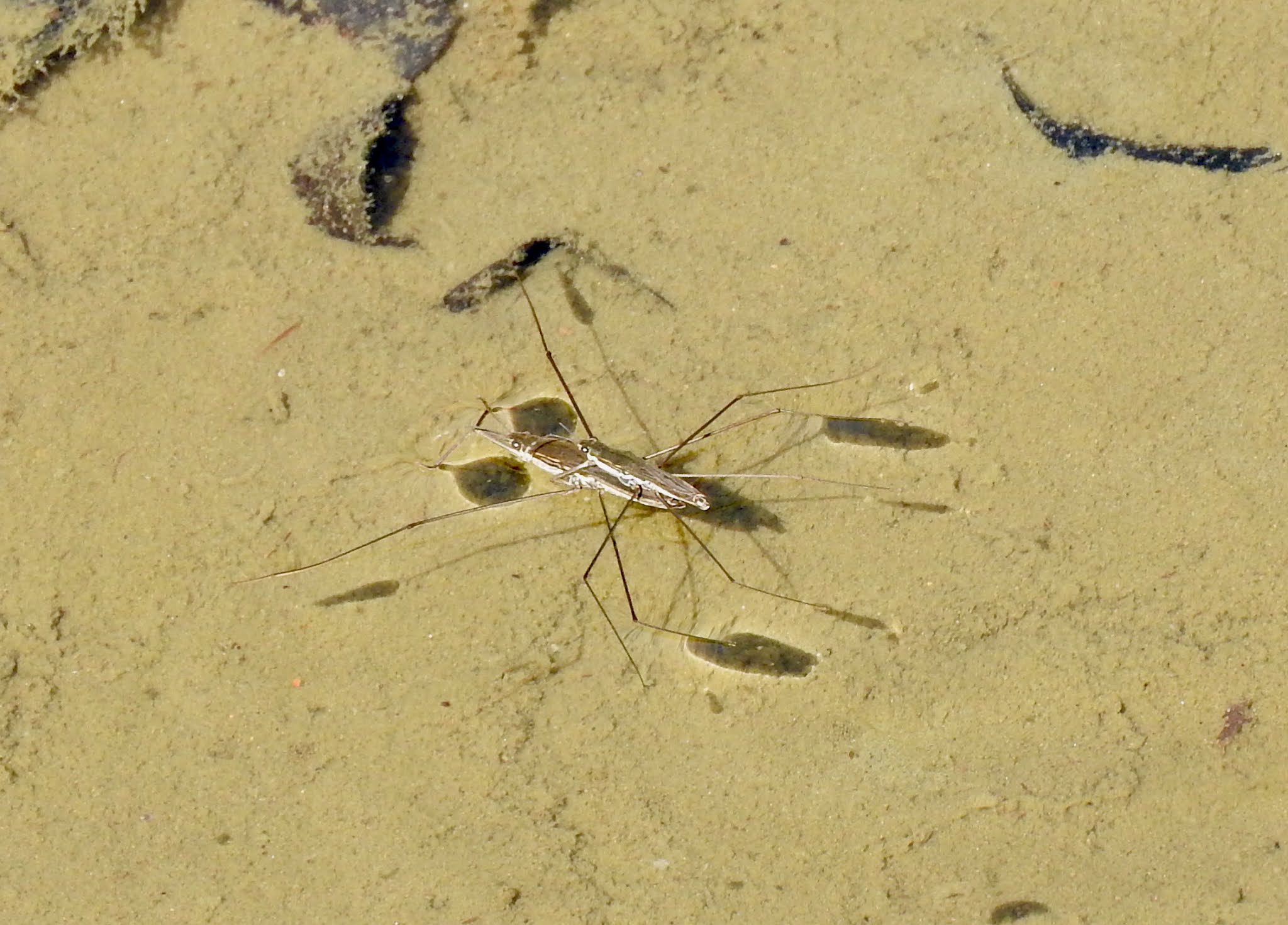 よく見ると、サイズの違うアメンボが 一緒に泳いでいるのです。 実は私はこのことを現地では気がつかず、 帰宅後PC上での写真を見て気がつきました。 これはアメンボが交尾していたのです(春~~)。 ちなみに小さい方がオスです。 If I look closely, water striders of different sizes are swimming together. Actually, I didn't notice this there, but after I got home, I noticed it by looking at photographs on my PC. This was water striders mating (spring ~~). By the way, the smaller one is the male. |
下記、学研サイトより
"交尾したアメンボのオスは、 必 ず 自分の卵を 産んでもらう
ため、ほかのオスが 近づいてこないように、メスが 産卵を 終わるまで、メスの背中から 降りないのです。"
面白いですね〜。
According to Gakken website only in Japanese,
"Mating water strider males do not necessarily descend from their backs until they have finished spawning, so that they will lay their own eggs, so that no other male will approach them."
It's interesting, isn't it?
B. 沼風 / Marsh Style
 |
| 池の縁はよく見えず、どこが池でどこが湿地で どこが岸辺なのかはわかりません。 The edges of the pond are not clearly visible, and it is not clear where the pond is, where the wetlands are, and where the shores are.  |
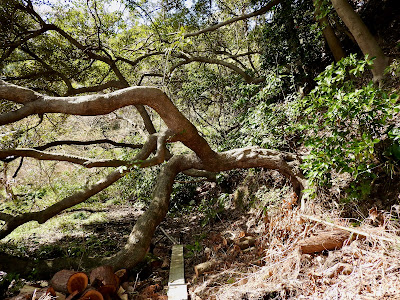 |
| 地面の上の板を見つけたので、進みましたがすぐに 行き止まりでした。 I found boards on the ground, so I proceeded, but soon it was a dead end.  樹形は魅力的! The tree shape is attractive! |
霊光寺も'雨乞いの池'も、なかなか興味深い場所でした。
ここから七里ヶ浜へ向かいましたが、思ったよりもずっと近く驚きました。
何度も行こうとは思いませんが、夏に池をまた見にきて見たいと思いました。
Both Reikoji - Temple and 'Rain-making Pond' were quite interesting places.
We headed to Shichirigahama Beach from here, but I was surprised that it was much closer than I expected.
I don't think I'll go there many times, but I want to come back to see the pond in the summer.