2023年6月27日火曜日

④ 2022年12月16日鎌倉文華館 鶴岡ミュージアム / Kamakura Bunkakan Tsurugaoka Museum - 16th of December, 2022

TV番組ポスター. ; "鎌倉殿の13人"
TV Program Poster ; "The 13 Lords of the Shogun"
画像は下記より / This from below
目次 / Contents
1) 大河ドラマ館の後で / After Taiga Drama Hall
2) 旧鎌倉館 / Former Kamakura Hall
    A. 近代美術館 / Museum of Modern Art
    B. 建築の特色 / Architectural Features
        a) 回廊式と大谷石 / Corridor-style and Ōya Stone
         b) 大階段 /  Grand Stairs
        c) ピロティ / Pilotis


1) 大河ドラマ館 / 
Taiga Drama Hall
私と夫Rは、'鎌倉文華館 鶴岡ミュージアム' で開催中の展覧会・
"鎌倉殿の13人 (カマクラドノノ13ニン・ 大河ドラマ館 "
{会期 : 2022年3月1日から2023年1月9日}
行きました。
"鎌倉殿の13人 大河ドラマ館" が併設され、2022年3月1日から2023年1月9日まで開設されました。

鎌倉殿の13人は、2022年に放映された、鎌倉幕府の初期の歴史をもとにした大河ドラマでした。

私達はTVを持っていないので、ドラマを見ていませんでしたが、展覧会は楽しく見ました。

会場となった、鎌倉文華館 鶴岡ミュージアム' は、鶴岡八幡宮 (ツルガオアカハチマングウ) の敷地内にあり、平家池 (ヘイケイケ) に面しています。

展覧会の後で、平家池沿いを歩きました。

池を一周することはできず、池沿いの小道は、美術館側から地図の24 : '茶寮 風の杜(カゼノモリ)' まで、風の杜脇から大通りに出ることができます。

 '茶寮 風の杜' は、日影茶屋 (ヒカゲジャヤ) が監修するカフェです。
境内マップ
1 : 本宮
22 : 
'鎌倉文華館 鶴岡ミュージアム' 
平家池は
水色部分、源氏池は水色部分です。
画像は下記より

Grounds Map
1 : Main Building 
22 : 'Kamakura Bunkakan Tsuruoka Museum'
Heike Pond is the blue part on the left, and 
Genji Pond is the 
blue part on the right.
画像は下記より/ This from below
After Taiga Drama Hall
My husband R and I went to the "Kamakura Bunkakan Tsuruoka Museum" to see the Exhibition : "The 13 Lords of the Shogun・
Taiga Drama Hall {Dates: March 1, 2022 to January 9, 2023}.
About the Exhibition, below.

"The 13 Lords of the Shogun" was a taiga drama based on the early history of the Kamakura Shogunate that was aired in 2022.

We don't have a TV, so we didn't watch the drama, but we enjoyed the exhibition.

The venue, the Kamakura Bunkakan Tsuruoka Museum, is located on the grounds of Tsurugaoka Hachimangū Shrine and faces Heikeike Pond.

After the exhibition, we walked next to Heike Pond.

You can't go all the way around the pond, but the path along the pond leads from the museum side to the map 24 : 'Saryo Kaze no Mori', and you can leave at the side of 'Kaze no Mori' and be on the main street.

'Saryo Kaze no Mori' is a cafe supervised by Hikage Jaya.


2) 旧鎌倉館 / Former Kamakura Hall
A. 近代美術館 / Museum of Modern Art
建物について
設計:坂倉 準三 (サカクラ ジュンゾウ / 1901 - 1969)
1951年に開館した神奈川県立近代美術館鎌倉館
ためにたてられました。

About the Building 
Designed by Junzo Sakakura (1901 - 1969)
It was built for the Kanagawa Prefectural Museum of Modern Art
 Kamakura Hall which opened in 1951.

2020年、改修工事を終えて、"鎌倉文華館 鶴岡ミュージアム"
に変わりました。

In 2020, after renovation work was completed,
it was transformed into
 the "Kamakura Bunkakan Tsuruoka Museum."

私が初めてこの建物を池越しに見た時、かっこいい建物、美しい景色だな〜と思いました。

私達が鎌倉に住み始めた頃は、まだ、近代美術館として機能していて、カフェもありました。

私達が近代美術館で開催された展覧会に行ったのは、2008年または2009年で、私がこのブログをまだ始めていないときでした。

そのときの記録をしていないことが悔やまれます。

坂倉 準三は、ル・コルビュジエ (1887 - 1965) のもとで学び、モダニズム建築を実践しました。

旧鎌倉館は、1999年DOCOMOMO (ドコモモ) 日本の近代建築20選に選出されています。(2024年6月時点には、290選、選出されています)
下記、Wiki、DOCOMOMO について。
"DOCOMOMO Internationalまたは国際ドコモモ(こくさいドコモモ)は、1988年に設立された非営利団体で、近代建築記録保存を目的とする国際学術組織
本部 (docomomo International) と70ヵ国以上の国と地域に設けられた支部から成る。
本部は当初、オランダデルフトに設置され、2002年からはフランスパリ、ポルトガルのリスボンを経て、2022年より再びオランダのデルフトに設置".

 DOCOMOMO 公式サイト :  (英語のみ)
南側から / From the South 

Museum of Modern Art
When I first saw this building across the pond, I thought it was a cool building and had a beautiful view.

When we first moved to Kamakura, it was still functioning as a modern art museum and had a cafe.

It was in 2008 or 2009 when we went to an exhibition there, before 
I had started this blog.

I regret not keeping a record of that time.

Junzo Sakakura studied under Le Corbusier (1887 - 1965) and practiced modernist architecture.

In 1999, former Kamakura Hall was selected as one of DOCOMOMO's 20 best modern Japanese buildings. 
(As of June 2024, 290 buildings have been selected.)

According to Wiki about Kamakura Hall
"The hall is located in Yukinoshita, KamakuraKanagawa prefecture, Japan (within precincts of the Tsurugaoka Hachiman-gū) and is the oldest public modern art museum in Japan, dating back to 1951. 
The building was designed by Junzo Itakakura
The museum building itself is also highly valued as an example of Japanese modern architecture and was selected as one of the DOCOMOMO Japan 150 in 1999."

According to Wiki, about DOCOMOMO
"Docomomo International (sometimes written as DoCoMoMo or simply Docomomo) is a non-profit organization whose full title is: International Committee for Documentation and Conservation of Buildings, Sites and Neighbourhoods of the Modern Movement."

 DOCOMOMO Official Website :


B. 建築の特色 / Architectural Features
a) 回廊式と大谷石 / Corridor-style and Ōya Stone
建築ガイド / Architectural Guide in Japanese
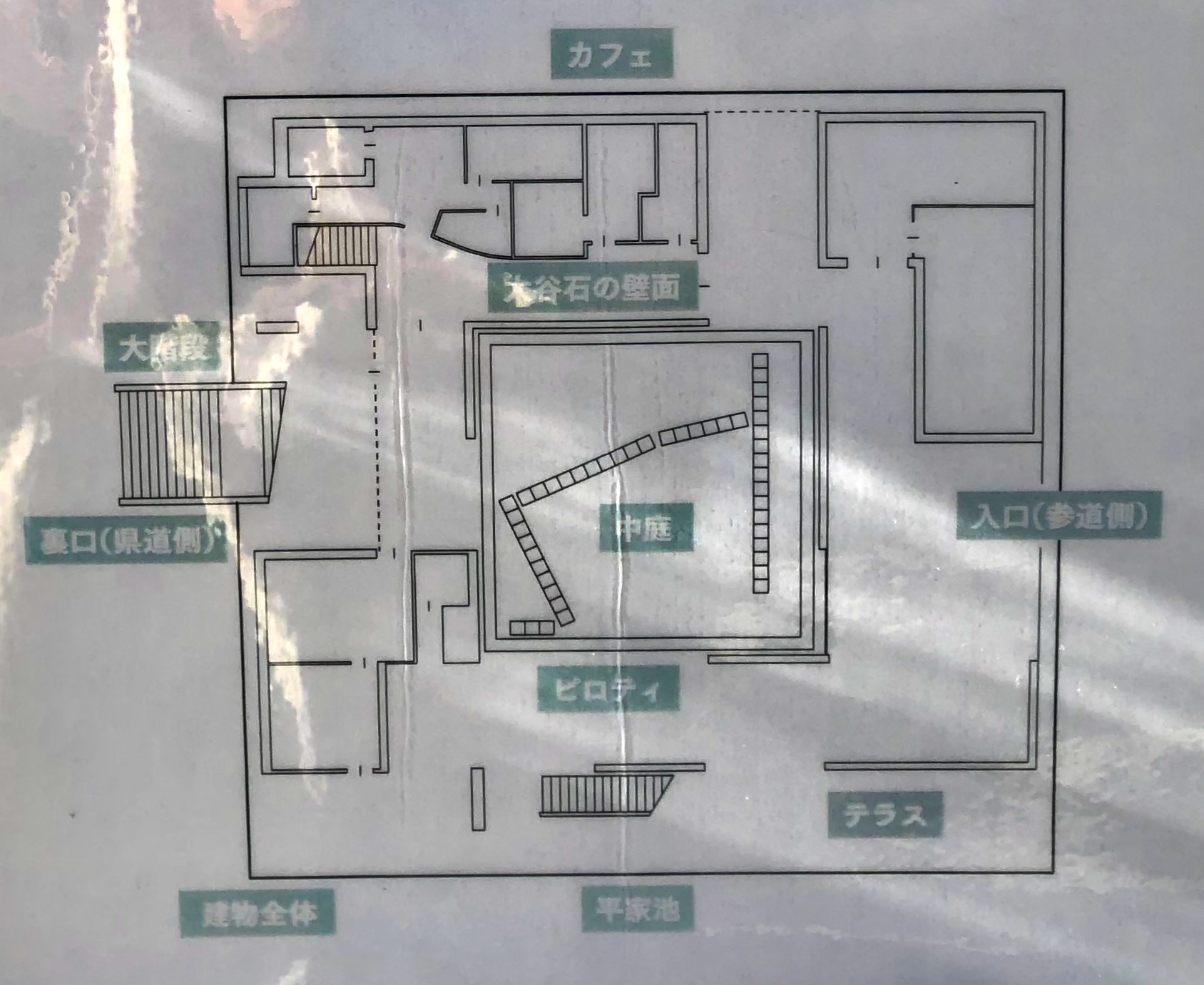
上の2つの画像は、ビニールコーティンされたものを
撮影したので、光、そのほかがうつりこんでいます。

The two images above were taken of something that was
 vinyl coated, so light and other things are reflected in it.


展覧会の会場から中庭を撮影
初めて、中から建物を撮影しました。

Photographing the Courtyard From the Exhibition Venue

This was the first time I photographed the building from inside.

中庭
下記、説明文より抜粋
回廊式の建物の中心となるのが、大谷石(オオヤイシ)積み壁に
よって構成される開放的な中庭です。
中庭にたって見上げると、四角い空が開けます

Courtyard 
The following is an excerpt from the description:
The centre of the corridor-style building is an open courtyard 
made of Ōya stone walls.
When you stand in the courtyard and look up, 
you will see a square expanse of sky.

下記Wiki、大谷石について。
"大谷石(おおやいし)は、栃木県宇都宮市北西部の大谷町付近一帯で採掘される軽石凝灰岩石材である。柔らかく加工がしやすいことから、古くから外壁土蔵などの建材として使用されてきた
現在も蔵の壁面などに使われている。

多孔質の独特な風合いが広く知られるようになったのは、アメリカの建築家フランク・ロイド・ライト (1867 - 1959) が、帝国ホテル旧本館(東京)に用いてからである"
大谷石積み 

 Ōya Stone Pile Up
The ground floor storey that faces onto the pond 
is built with Ōya stone.
According to Wiki about Ōya stone
"Ōya stone (大谷石, Ōya-ishi) is an igneous rock, created from lava and ash. 
Ōya stone was famously used in the facing of Frank Lloyd Wright (1867 - 1959) 's Imperial Hotel in Tokyo. 
One reason this stone was used is because it has a warm texture and is easily carved, which allows much versatility.
Ōya stone can have different colors and is also fireproof.

Ōya stone can only be found in an area 4 kilometers to the east and west by 6 kilometers to the north and south around the town of Ōya, near Utsunomiya, but there are reserves of around 600 million tons."


b)  大階段 / Grand Stairs
大階段
通常の展覧会では、参道側が正面玄関で、
チケットもそこで販売されています。
当時はここが正面入り口になっていたという説明がありますが、
大河ドラマ館では、当時のようにここが入り口で、
チケットも1Fの (小窓がある) で販売していました。 
通常ここは、裏口扱いです。
豪華な裏口ですよね?

 Grand Stairs
Nowadays, for regular exhibitions, the main entrance is 
on the Hachimanngu approach side, 
and tickets are also sold there.
There is an explanation that these stairs were the main entrance 
originally, but for the 'Taiga Drama Hall', here was the entrance as
 it was back then, and tickets were sold on the left side of 
the ground floor (where there are small windows).
Normally this is treated as the back entrance.
A luxurious back entrance, isn't it?
入り口・階段上の巨大ポスター
Huge Poster at the Top of the Stairs, Entrance


【追記】2025年4月6日
写真は2025年4月5日に撮影しました。
右に桜の木があります。
桜の季節です。
展覧会が開催中でしたが、入り口は参道側で、
ここからは入館できませんでした。


【Postscript】6th of April, 2025
The photograph was taken on 5th of April, 2025.
 There is a cherry blossom tree on the right.
It was cherry blossom season.
An exhibition was being held, but the entrance was 
on the Shrine approach side, 
so we couldn't enter from here.


C) ピロティ/ Pilotis
ピロティ
下記、説明文より抜粋
"池に反射した光が天井に映る空間は、
当館のもっとも代表的な空間のひとつです。"

 Pilotis
The following is an excerpt from the description:
"The space where the light reflects off the pond and
onto the ceiling is one of the most representative spaces
 in the museum. "

ピロティ、または支柱は、建物を地上または水面上に持ち上げる柱、支柱、または支柱などの支持物です。

柱だけで、壁のない空間を示すこともあります。

ル・コルビュジエが推奨した建築様式ですが、その様式は、アジア・スカンジナビア・オーストラリアの高床式住居の伝統に見ることがでいます。

素敵な空間 / Lovely Space

Pilotis, or pilasters, are supports such as columns, stilts, or pillars that raise a building above ground or water.

Sometimes columns alone indicate a space without walls.

This is an architectural style advocated by Le Corbusier, and the style can be seen in the Asia, Scandinavia and Australia stilt house tradition.
(References: Japanese Wiki and English Wiki.)
テラス
下記、説明文から抜粋。
"柱を両側から石で挟み込むことによって、日本の古建築のように
水面に置いた束石 (つかいし) から柱があたかも立って
いるかのような、面白いデザインになっています。"

Terrace
The following is an excerpt from the description :
"By sandwiching the pillars between stones on both sides, 
it is an interesting design that gives the impression that
 the pillars are standing on foundation stones placed 
on the water, like in old Japanese architecture."
テラスからの眺め
右の建物は、地図の24: 茶寮 風の杜
天井に、池からの光の反射が見られます。

View From the Terrace
The building on the right, map 24 : Saryo Kaze no Mori ;
Teahouse Kaze no Mori. 
You can see the light reflects off the pond and onto the ceiling.
テラスからの眺め
リフレクションがはっきり見えます。

View From the Terrace
The reflection is clearly visible.


左から、テラス、茶寮 風の杜、池沿いの小道
私達は、池沿いの小道を進みました。
小道の散策は、つぎのセクションに載せます。


From the left, the Terrace, 'Saryo Kaze no Mori', and the Path Along the Pond
We walked along the path that runs alongside the pond.
Our walking the path is in the next section.


2023年6月26日月曜日

③ 2022年12月16日 "鎌倉殿の13人 - 大河ドラマ館" / "The 13 Lords of the Shogun - Taiga Drama Hall", 16th of December, 2022

目次 / Contents
1) 鶴岡八幡宮の敷地 / Grounds of Tsurugaoka Hachimangū 
2) 13人 / The 13 Lords 
    A. テレビもないのに...  / Even Though No TV...
    B. 北条氏 / Hōjō Clan  
    C. 文士 /  Literalti 
3) 入り口まで / Before Entrance
    A. 北条氏展 /  Hōjō Clan Exhibition
    B. インフォメーション / Information
4) 大河ドラマ館 / Taiga Drama Hall


1) 鶴岡八幡宮の敷地 
Grounds of Tsurugaoka Hachimangū 
私と夫Rは、'鎌倉文華館 鶴岡ミュージアム' で開催中の
"鎌倉殿の13人(カマクラドノノ13ニン・ 大河ドラマ館 "
行きました。

'鎌倉文華館 鶴岡ミュージアム' は、鶴岡八幡宮 (ツルガオアカハチマングウ) の敷地内にあります。

'鎌倉文華館 鶴岡ミュージアム' については、次のセクションに載せ、このセクションでは、"鎌倉殿の13人・ 大河ドラマ館' について載せます。

ちなみに、我が家にはTVがないので、 '鎌倉殿の13人' は、見ていません。
番組ポスター ; "鎌倉殿の13人"
ポスターの人物は、主役の小栗旬 (オグリシュン / 1982 ~) で、
北条義時 (1163 - 1224)演じています。

下記
、Wiki 鎌倉殿の13人から
"『鎌倉殿の13人』(かまくらどのの13にん)は、
2022年 (令和4年) 1月9日から12月18日まで放送された
鎌倉幕府の二代執権となった北条義時主人公
平安末期から鎌倉初期を描く。"

 Program Poster ; "The 13 Lords of the Shogun"
The person in the poster is the lead actor, Oguri Shun (1982~),
who plays Hōjō Yoshitoki (1163 - 1224).

According to Wiki about "The 13 Lords of the Shogun", 
"The 13 Lords of the Shogun 
(鎌倉殿の13人, Kamakura-dono no Jūsan-nin)
 is a Japanese historical drama television series starring 
Shun Oguri as Hōjō Yoshitoki
.
The series is the 61st NHK taiga drama."

画像は下記より / This from below


Grounds of Tsurugaoka Hachimangū
My husband R and I went to the "Kamakura Bunkakan Tsuruoka Museum" to see the Exhibition : "The 13 Lords of the Shogun・Taiga Drama Hall ."

The "Kamakura Bunkakan Tsuruoka Museum" is located in the grounds of Tsurugaoka Hachimangū Shrine.

I'll post about the "Kamakura Bunkakan Tsuruoka Museum" in the next section, and in this section I'll post about the "The 13 Lords of the Shogun・Taiga Drama Hall".

By the way, we don't have a TV at home, so we haven't watched 
"The 13 Lords of the Shogun".
鶴岡八幡宮
下記、Wikiより
"11世紀後半に、源氏 (河内源氏/ カワチゲンジ) 
守り神として創建された。
以後、鎌倉
武士の守護神となる"

Tsurugaoka Hachimangū Shrine
According to Japanese Wiki about the Shrine,
(translated by me)
"It was founded in the late 11th century
as the guardian deity of the Minamoto clan (Kawachi Genji).
It later became the guardian deity of the Kamakura samurai."


鎌倉の地図
23 : 鶴岡八幡宮
この鎌倉の地図には、主要な史跡のおおよその位置が
記されています。

Map of Kamakura 
23 : Tsurugaoka Hachimangū Shrine
This map of Kamakura shows
 the approximate locations of major historical sites.

画像は下記より / This from below


境内マップ
22 : '鎌倉文華館 鶴岡ミュージアム' 

Grounds Map
22 : 'Kamakura Bunkakan Tsuruoka Museum'
画像は下記より/ This from below


2) 13人 / The 13 Lords 
A. テレビもないのに.... 
 Even Though No TV...
"鎌倉殿の13人"は、頼朝死後に発足した集団指導体制の
"十三人の合議制" (1199 - 1200) を指します。

脚本を書いた三谷幸喜 (ミタニコウキ/ 1961 ~) は、
"十三人の合議制"は、日本で初めての合議制なのです」
だと制作発表会のときに言っていたと記憶しています"(Youtube)

前述しましたが、我が家にはTVがないので、 このドラマを見ていません。

にも関わらず、今回の大河ドラマに興味を持っていたのは、
梶原 景季 (カジワラ カゲスエ / 1162 - 1200) の妻、信夫 (シノブ) の塚:"しのぶ塚" を鎌倉山でみつけたからでした。

なぜ、こんな住宅地のなかに突然、この塚があるのか、疑問に思いました。

景季は、13人のうちの一人梶原 景時 (カジワラ カゲトキ / 1140 - 1200) の嫡男 (チャクナン) で、別名は源太です。

頼朝亡きあと、景時は、御家人66人の連名の弾劾を受けて、鎌倉から追放され、梶原一族は、所領の相模国一ノ宮へ退き、父子とも山中で自害しました。
[梶原景時の変 / カジワラ カゲトキ ノ ヘン (1199 - 1200)  ]

景季 (源太) の片腕だけが鎌倉へ送られ、仏行寺 (ブツギョウジ)  の
源太塚 (ゲンタヅカ) に埋められていると言われています。
仏行寺 〒248-0027 神奈川県鎌倉市笛田3丁目29 -22

景季の死を知った信夫が、この地、笛田で自害しました。

彼女の死後も周辺に彼女の悲しい泣き声がするので、村人たちは、
信夫 (シノブ) の霊を慰めるため、1495年、
仏性院日秀(ブッショウインニッシュウ/ ?-?) に供養を依頼し、庵ができました。

この地に庵を結んだのが仏行寺の始まりと言われています。

もともと、しのぶ塚は、源太塚と向き合って建っていましたが、その後の宅地開発や笛田公園の整備などのために、うつされ、現在、鎌倉山の住宅地にあるのです。

仏行寺はツツジ寺として有名なのですが、私と夫Rが初めてこのお寺を訪ねた時は、源太塚 が目的でしたので、ツツジの季節ではありませんでした。

鎌倉には、梶原 (カジワラ) という地名があり、そこが梶原一族の出自の地だということもその頃に知りました。

これらのことをリサーチしているうちに、NHK大河ドラマ
鎌倉殿の13人』[2022 / 脚本:三谷 幸喜] が"十三人の合議制" に題材をとっていることを知りました。

また、梶原 景時は、二代目中村獅童 (ニダイメ・ナカムラ シドウ / 1972 ~) が演じることも知りました。
The 13 Lords of the Shogun 
画像は下記より/ This from below
Even Though No TV...
"The 13 Lords of Shogun" refers to the "Council of 13" (1199 - 1200), a collective leadership system established after the death of Yoritomo.

I remember that Kōki Mitani  (1961~), who wrote the screenplay, said at the production announcement that "The 'Council of 13' was the first such system in Japan."(Youtube)

As I mentioned earlier, we don't have a TV at home, so we haven't watched this drama.

Despite this, I was interested in this taiga drama because I found the tomb of Kajiwara Kagesue (1162 - 1200)'s , wife Shinobu, in Kamakurayama.

I wondered why there was suddenly this tomb in such a residential area.
About Shinobu's tomb below.

Kagesuke was the eldest son of Kajiwara Kagetoki (1140 - 1200) who was one of the thirteen, and Kagesuke's another name was Genta.

After Yoritomo's death, Kagesue's father, Kagetoki was banished from Kamakura after being impeached by 66 Gokenins ; Vassals, and the Kajiwara clan retreated to Sagami Province where he and his son : Kagesue committed suicide in the mountains. [Incident of Kajiwara Kagetoki ; 1199 - 1200]

It is said that only one arm of Kagesue (Genta) was sent to Kamakura and buried in Genta-zuka : Genta Mound in Butsugyoji Temple.
Butsugyo-ji: 3-29-22 Fueda, Kamakura, Kanagawa 248-0027

Shinobu knew of Genta's death and committed suicide here in Fueda.

Even after her death, her sad cries could be heard in the surrounding area, so in 1495, to console Shinobu's spirit, the villagers asked Busshoin Nisshu (?-?) to perform a memorial service for her and a hermitage was built.

The origin of Bukgyoji Temple is said to be this hermitage.

Originally, Shinobu tomb was built facing Genta Mound, but it is thought that it was moved due to the subsequent development of residential land and the improvement of Fueda Park, so it is currently located in the residential area of ​​Kamakurayama.

Actually, Butsugyo-ji Temple is famous as the Azalea Temple, but when we first visited there, our purpose was for the Moundso it was not the season for azaleas.

I also learned around that time that there is a place called Kajiwara in Kamakura, which is the birthplace of the Kajiwara clan.

While researching these things, I found out that there would be an NHK Taiga drama "The 13 Lords of Shogun" [Kamakuradono no 13nin, 2022 / Screenplay : Koki Mitani] is based on the "Council of 13 People."

I also found out that Kajiwara Kagetoki is played 

梶原 景時 
(カジワラ カゲトキ / 1140 - 1200)

血筋もよく(第50代桓武天皇が高祖父)、文武に優れ、
京都とのつながりもあったので、
他の人々に嫉妬されたのでしょうか?
俳優 : 二代目中村獅童 

Kajiwara Kagetoki

(
1140 - 1200)
He was of good lineage ; his great-grandfather was
 the 50th Emperor Kanmu.
 He excelled in both the arts and martial arts,
 and had connections with Kyoto.
So perhaps he was envied by other people?
Actor : Nakamura Shidō  II 
画像は下記より / This from below


梶原 景季 
(1162 - 1200)
画 : 歌川国芳 (ウタガワ クニヨシ/ 1798 -1861)

Kajiwara Kagesue 
(1162-1200)
 By Kuniyoshi Utagawa (1798 -1861)
画像は下記より/ This from below


源太塚
源太塚は、庭と墓地を抜けた、山の頂上にあります。
2021年4月12日撮影

Genta Mound : Genta-zuka
Genta Mound is at the top of the mountain, 
through the garden and graveyard.
Photographed on 12th of April, 2021


B. 北条氏 / Hōjō Clan  
画像は下記より / This from below


北条 義時 (ホウジョウ ヨシトキ)(1163 - 1224)
脚本を書いた三谷幸喜 (ミタニコウキ/ 1961 ~)が
源頼朝が挙兵してから承久の乱 (ジョウキュウノラン/ 1221)までの
40年以上にわたる時代を描こうとしたとき、
全ての証言者になれる人物は義時くらいだった」
(Wikiよりと言うことで、義時が主役になりました。
俳優 : 小栗旬 (オグリシュン / 1982 ~)

Hōjō Yoshitoki (1163 - 1224)
The screenwriter, Kōki Mitani (1961~) said, 
"When I was trying to depict the period spanning more than 
40 years from when Minamoto no Yoritomo (1147 - 1199) raised 
his army to the Jōkyū War (1221), Yoshitoki was the only 
person who could be a witness to all of the events" (from Wiki),
 and so Yoshitoki was chosen as the central character.
 Actor :  Oguri Shun (1982~)
画像は下記より/ This from below

源 頼朝 (ミナモトノヨリトモ / 1147 - 1199) は、鎌倉幕府
初代征夷大将軍 (鎌倉殿 / カマクラドノ)です。
下記、Wiki 鎌倉殿について
"鎌倉殿は、鎌倉幕府棟梁、また、そこから転じて鎌倉幕府そのものを指すこともある。
源為義 (ミナモト ノ タメヨシ/1096 - 1156 ) あるいはその子の
義朝 (ヨシトモ / 1123 - 1160) 以降は清和源氏 (セイワゲンジ)武家 ; 武家貴族 / 軍事貴族)の棟梁を鎌倉家、鎌倉殿、鎌倉流とも呼ぶようにもなった。
「平家物語」では「鎌倉殿」とは頼朝を指し、歴史的には源頼朝と強く結びついた言葉である。
幕府」の語は江戸中期以降用いられたものであり、鎌倉時代の武士は鎌倉幕府を「鎌倉殿」と呼んでいた。"


Minamoto no Yoritomo (1147 - 1199) was the first Shogun of the Kamakura shogunate (Kamakura-dono).

The Drama is "The 13 Lords of the Shogun" : 
 "Kamakura-dono no 13 (Jusan) nin" in Japanese.

According Japanese  Wiki about Kamakura-dono, (translated by me) 
"Kamakura-dono" can refer to the head of the Kamakura Shogunate, and by extension, the Kamakura Shogunate itself.
After Minamoto no Tameyoshi (1096 - 1156) or his son, Yoshitomo (1123 - 1160), the head of the Seiwa Genji (Samurai / Buishi) came to be called the Kamakura family, Kamakura-dono, or Kamakura-ryu.
In 'The Tale of the Heike', 'Kamakura-dono' refers to Yoritomo, and historically it is a word strongly linked to Minamoto no Yoritomo.
The word 'bakufu' was used from the mid-Edo period onwards, and samurai in the Kamakura period called the Kamakura shogunate "Kamakura-dono."


北条 時政 (1138-1215) 
 
初代執権義時の父
俳優 : 坂東彌十郎 (バンドウ ヤジュウロウ / 1956~)

Hōjō Tokimasa (1138-1215) 
The first shikken Yoshitoki's father
According to Wiki 
Shikken,
"The shikken (Japanese: 執権) was a titular post held 
by a member of the Hōjō clan, officially a regent of
 the shogunate, from 1199 to 1333, during the Kamakura 
period, and so he was head of
 the bakufu (shogun's government). 
It was part of the era referred to 
as Regent Rule (執権政治, Shikken Seiji)."
Actor : Bandō Yajūrō (1956~)
画像は下記より / This from below


三浦 義澄​ (ミウラヨシズミ / 1127​ - 1200​)
頼朝に使え、頼朝の死後は、北条氏に協調的で、
一族は勢力を強めました。
俳優 : 佐藤 B作 (サトウビイサク/ 1949~)

Miura Yoshizumi (1127 - 1200)
He served Yoritomo, and after Yoritomo's death,
he cooperated with the Hōjō clan,
and the clan grew increasingly powerful.
Actor : Bisaku Sato  (1949~)
画像は下記より / This from below


和田 義盛 (ワダ ヨシモリ/ 1147 - 1213)
初代・侍所別当(サムライドコロ ベットウ)
梶原景時の変(1199 - 1200)では、景時弾劾追放の中心的な
役割を果たしました。

'和田'ときくと、和田塚を連想します。
和田塚は、鎌倉の住人ならだれでも知っていることでしょう。
1213年におきた和田合戦 (ワダガッセン)で、和田一族は滅亡し、
和田義盛軍を供養した塚が、和田塚です。
俳優: 横田 栄司 (ヨコタエイジ/ 1971~ )

Wada Yoshimori  (1147 - 1213)
He was the first bettōdirector of
the shogunate's Samurai-dokoro:  the Board of Retainers.
During the 'Incident of Kajiwara Kagetoki' ; 1199 - 1200,
he played a central role in impeaching and exiling Kagetoki.
When I hear the word 'Wada', I think of Wada-zuka : WadaTomb.
Any resident of Kamakura would know about Wada-zuka.
In the Wada Battle of 1213, the Wada clan was annihilated, 
and Wadazuka was built as a memorial 
for the army of Wada Yoshimori.
Actor : Eiji Yokota (1971~)
画像は下記より / This from below


比企 能員 (ヒキ ヨシカズ / ?​- 1203)
能員の台頭を恐れた北条時政 (ホウジョウトキマサ / 1138 -1215)
との対立により'比企能員の変' (1203) が起こり、
比企一族は根絶やしにされました。

俳優 : 佐藤二朗 (サトウジロウ・1969~)

Hiki Yoshikazu (?​ - 1203)
Conflict with Hōjō Tokimasa (1138-1215), who feared
Yoshikazu's rise to power, led to the 'Hiki Yoshikazu Incident' (1203),
 in which the Hiki clan was wiped out.
Actor : Jiro Sato (1969~)
画像は下記より / This from below


安達 盛長 (アダチ モリナガ / 1135 -1200)
源頼朝流人時代 (1160 - 1180) からの側近。
頼朝の死により出家。
俳優 : 野添 義弘 (ノゾエヨシヒロ / 1958~)

Adachi Morinaga (
1135 -1200)
He was a close aide to Minamoto no Yoritomo
 since his exile 
(1160 - 1180) began .
He became a monk after Yoritomo's death.
Actor : Yoshihiro Nozoe (1958~)
画像は下記より / This from below


C. 文士 /  Literalti 

三善 康信​ (ミヨシヤスノブ/ 1140​ - 1221)
京都の下級文人貴族で、叔母が頼朝の乳母であった縁から、
流人時代の頼朝に京都の情報を送っていました。
康信は、初代問注所 (1184年創立) 執事長として、
から鎌倉へ招かれました
俳優 : 小林 隆 (コバヤシ タカシ/ 1959~)

Miyoshi Yasunobu  (1140 - 1221)
He was a lower-ranking literati and aristocrat from Kyoto. 
His aunt was Yoritomo's wet nurse, and so he sent Yoritomo
 information about Kyoto during Yoritomo's exile. 
Yasunobu was invited from Kyoto to Kamakura to serve 
as the first chief steward of the Monchu-jo (established in 1184).
Actor : Takashi Kobayashi (1959~)
画像は下記より / This from below

According to Wiki about Monchu-jo
"The monchu-jo was a Kamakura era institution established by Minamoto no Yoritomo (1147 - 1199) in 1184 as a board of inquiry that dealt with legal matters such as lawsuits and appeals. 
Most cases included land rights, business dealings and loans.
 This court of appeals that dealt with property disputes that could not be settled at a lower level, which prevented a lot of unnecessary property-based warfare."


大江 広元​ (オオエノ ヒロモト / 1148​ - 1225) 
朝廷に仕える下級貴族 (官人)でしたが、
鎌倉に下って頼朝の側近となりました。
大蔵御所(オオクラゴショ: 大倉幕府 / オオクラバクフ)
公文所 (クモンジョ: 文書の管理・財政・政務機関) /
後の政所 : 一般政務・財政) 鎌倉幕府の初代別当を務め、
幕府創設に貢献しました。
俳優 : 栗原 英雄 (クリハラ ヒデオ/ 1965 ~)

Ōe no Hiromoto (1148 - 1225)
He was a lower-ranking aristocrat (official) serving the Imperial 
Court, but went down to Kamakura and 
became a close aide to Yoritomo.
He served as the Ōkuragosho (Ōkura Bakufu) 
Kumon-jo (storing documents and handling government affairs /
 later the Mandokoro ; general affairs and finance) and 
he served as the first Bettō head priest of the Kamakura Shogunate
 and contributed to the founding of the Shogunate.
Actor : Hideo Kurihara (1965 ~)
画像は下記より / This from below

According to Wiki about Bettō
"Bettō (別当) is a term which originally indicated the head of an institution serving temporarily as the head of another one, but which came to mean also the full-time head of some institution."


二階堂 行政 (ニカイドウ ユキマサ/ ?-? )
私達が以前住んでいたのは、二階堂でした。
行政の二階堂の苗字は、1192年に建立された
永福寺 (ヨウフクジ / 二階建ての仏堂があった)の周辺に、
行政が邸宅を構えたことに由来します。
鎌倉では公文所の設置や寺社の差配、
幕府の財政などの業務に携わりました。

政所が設置されると、大江広元のもとで、
発揮していたと考えられています

俳優 : 野仲イサオ (ノナカ イサオ / 1959 ~)

Nikaido Yukimasa (?-?)
We used to live in Nikaido, Kamakura.
His Nikaido family name comes from the fact that 
the government officials had their residence near 
Yofuku-ji Temple (which had a two-storey Buddhist hall ; Nikaido) 
built in 1192.
In Kamakura, he was involved in the establishment of the official documents office, management of temples and shrines, 
and the shogunate's finances.
After the Mandokoro ; General Affairs and Finance was 
established, it is believed that he extended his influence 
under Oe Hiromoto
Actor : Izaso Nonaka (1959 ~)
画像は下記より / This from below


中原 親能​ (ナカハラ ノ チカヨシ/ 1143 ​- 1208)
頼朝の側近で、朝廷と幕府の連絡役に努め、
幕府の対
公家交渉で大きな功績を果たしました。
俳優 : 森本 武晴 (モリモトタケハル/ 1969~)

Nakahara Chikayoshi (1143 - 1208)
He was a close aide to Yoritomo, served as a liaison
between the Imperial Court and the shogunate,
and made a great contribution to the shogunate's negotiations
with the Kuge : the aristocratic class.
Actor : Takeharu Morimoto (1969 ~)
画像は下記より / This from below


D. 武士 / Samurai Combatant

八田 知家 (ハッタ トモイエ / ? - ?)
下野国 (シモツケノクニ: 現・栃木県) 出身の武士で、後に
常陸国新治郡八田 (ヒタチノクニ ニイハリグン ハッタ /
 現・
茨城県筑西市八田) を本拠とし、八田を苗字にしました。
奥州合戦 (オウシュウカッセン / 1189) では、
東海道軍の大将軍に任じられて活躍しました。
知家の鎌倉屋敷は大倉御所の南門付近にありました。
京文化に通じていたと思れる知家の屋敷は、
しばしば京都からの使者の宿所に充てられていました。
子孫は鎌倉時代を通じて繁栄しました。

俳優 : 市原 隼人(イチハラハヤト/ 1987~ )


Hatta Tomoie (
? - ?)
A samurai from Shimotsuke Province 
(present-day Tochigi Prefecture), 
he later made Hatta, Nihari-gun (district), Hitachi Province 
(present-day Hatta, Chikusei City, Ibaraki Prefecture) 
his base and took the surname Hatta.
During the Battle of Ōshū (1189), he was appointed 
General of the Tōkaidō army and worked well.
His Kamakura residence was located 
near the south gate of the Ōkura Bakufu.
He was a knowledgeable person who was thought to have been
 familiar with Kyoto culture, so his residence was often used 
as accommodation for envoys from Kyoto, 
His descendants prospered throughout the Kamakura period.
Actor : Hayato Ichihara (1987~)
画像は下記より / This from below


足立 遠元 ​ (アダシ トオモト / ? - ?)
武蔵国足立郡 (ムサシノクニ アダチグン /
東京都足立区から埼玉県北足立郡を本拠としました。
公文所が設置されると、5人の寄人 (ヨリウド/ 職員) の
1人に選ばれました。
武士出身でありながら公文所の寄人に
選ばれるなど、坂東武士 (バンドウブシ) の中にあって
文官的素養を持つ人物でした。
俳優 : 新名 基浩 (ニイナモトヒロ / 1982 ~)

Adachi Tomoto (? - ?)
He was based in Adachi County, Musashi Province 
(present-day Adachi Ward, Tokyo to Kita-Adachi County, 
Saitama Prefecture).
When the Komonsho was established, 
he was chosen as one of the five contributors.
Even though he was of a standard samurai origin, he was chosen 
as a contributor to the Kumon-jo, 
showing that he possessed the civil service background
 unusual among the samurai of the Kantō region.
Actor : Motohiro Niina (1982 ~)
画像は下記より / This from below


3) 入り口まで / Before Entrance
A. 北条氏展 / Hōjō Clan Exhibition
'大河ドラマ館'の入り口へ向かい途中、複数の"鎌倉殿の13人"に関する展覧会やイベントの広告を目にしました。

鎌倉市を含め、鎌倉が一丸となって、このドラマを元にした観光に力を入れているのを感じました。
This says, 
"By presenting the leaflet distributed upon entering
the Taiga Drama Hall,  you can enter both
the Kamakura National Treasure Museum and
 the Kamakura History and Culture Exchange Center
once each for free."
Hōjō Clan Exhibition
On the way to the entrance of the 'Taiga Drama Hall', I saw advertisements for several exhibitions and events related to
 the "13 Lords of the Shogun".

I got the feeling that the whole of Kamakura, including the city of Kamakura, is working together to promote tourism based on this drama.

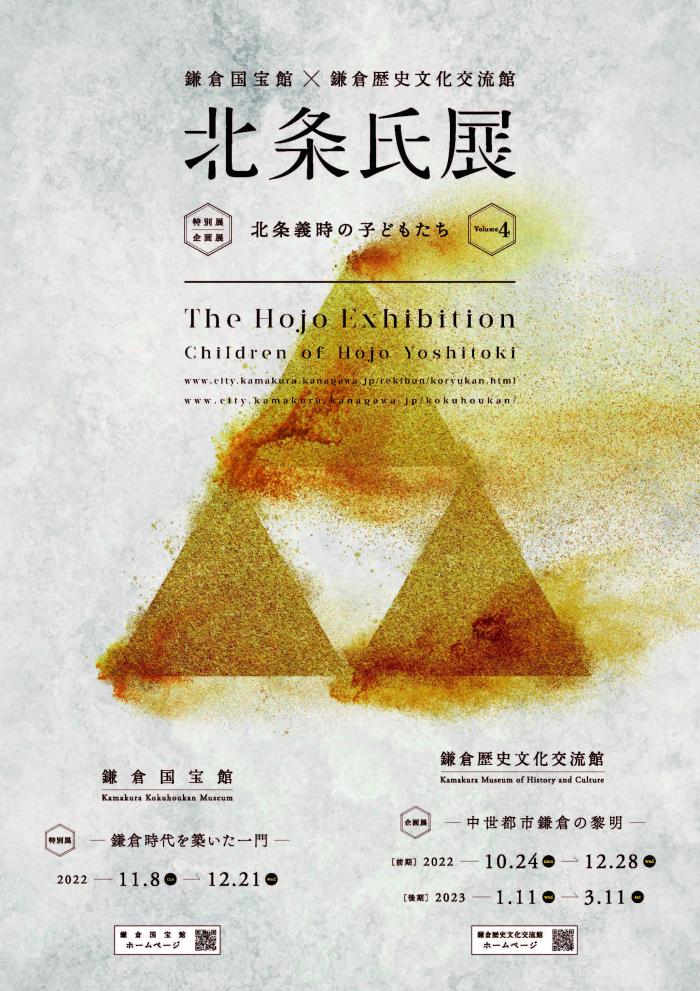
北条氏展 ポスター
鎌倉国宝館鎌倉文化交流館、共通のポスターです。
北条氏展は2021年から2022年4回に渡り、開催されていました。
今回は、

"Vol.4 北条義時の子どもたち―中世都市鎌倉の黎明―」"
になります

私達は、"
大河ドラマ館"だけ見るだけで精一杯でした。

Poster of Hōjō Clan Exhibition (Vol.4)
This poster is shared by the Kamakura Museum of National 
The Hōjō Clan Exhibition was held four times 
between 2021 and 2022.
This is the fourth time :
"Children of Hōjō Yoshitoki : 
The Dawn of the Medieval City of Kamakura".
Our ability only allowed us to visit  "Taiga Drama Hall".
画像は下記より / This from below.

下記 "鎌倉殿の13人"に関する企画展。
(太字カラー部分をクリックすると展覧会を説明するサイトになります)

There are special exhibitions on "The 13 Lords of Shogun", below.
(Click on the bold colored parts to go to the website explaining each exhibition, however, the website is only in Japanese.)

2021年
場所 : 鎌倉文化交流館
会期 : 2021年9月25日 - 12月18日

北条氏展は、鎌倉国宝館と鎌倉文化交流館の二ヶ所で、北条氏に関連する同一のテーマで開催していました。
2021年~2022年
会期  : 2022年1月4日 - 3月26日

1) 会期  : 2022年10月24日 - 12月28日
2) 会期  : 2022年1月11日 - 3月11日


B. インフォメーション / Information
Tour
Tour of places related to the events with a guide.
ゆかりの地マップ
Map of Places of Connection to the Drama


しゃべる肖像画ポスター
このポスターも番組ポスター同様に、鎌倉でよく見ました。
"QRコードを読み込んでから肖像画にかざすと、
目の前で肖像画が動き、しゃべり出します。"
という説明がありましたが、私には実現できませんでした。
(とほほ...)

Talking Portrait Poster
Like the TV program poster, I often saw this poster in Kamakura.
The explanation was,
"If you scan the QR code and hold it up to a portrait,
the portrait will move and speak right before your eyes."
But I couldn't make it happen.

(Boo hoo)


チラシ / Leaflet 

画像は下記より / These From below


3) 大河ドラマ館 / Taiga Drama Hall
鎌倉殿の13人 大河ドラマ館 
開設期間:2022年3月1日 - 2023年1月9日
開館時間:9時30分 - 17時00分(最終入館16時30分)
休館日:無休

入り口 /  Entrance 
Taiga Drama Hall
Opening period : 1st of March, 2022 to 9th of January, 2023
Opening hours : 9:30 - 17:00 (last entry 16:30)
Open every day

"The 13 Lords of the Shogun" refers to the "Council of 13" (1199 - 1200)  that was a collective leadership system established after the death of Yoritomo.

入り口・階段上の巨大ポスター
下記、サイト: より
"展示案内
史上はじめて武家政権が樹立された鎌倉市で、当時のまちの中心、
鶴岡八幡宮境内に「鎌倉殿の13人 大河ドラマ館」
を開館しました。

実物展示と映像展示による、ここでしか見られないコンテンツを
多数揃え、大河ドラマの世界観を楽しめる展示としました。"


Huge Poster at the Top of the Stairs, Entrance
According to their website : only in Japanese, (translated by me)
"Exhibition Guide
"The 13 Lords of the Shogun - Taiga Drama Hall" was opened
 in the grounds of Tsurugaoka Hachimangu Shrine, 
the centre of the city of Kamakura, where a samurai 
government  was established for the first time in history.
The exhibition features a variety of content that can only be seen here, including life-size exhibits and video displays, 
allowing visitors to enjoy the world of the Taiga drama. "


会場
娯楽要素が強い展示で、いくつかの部分は、体験式でした。
音楽制作や俳優さんへのインタヴューなどの動画がありました。
ドラマに使用された衣装を興味深く見ました。
俳優さんのサイン及び直筆コメントの展示もありました。
ドラマを見ていない私達も、展覧会を楽しめました。

Venue
It was an exhibition with a strong entertainment element,
and some parts were experiential.
There were videos on music production and interviews with actors.
I was interested in the costumes used in the drama.
There was also an exhibition of the actors' autographs and handwritten comments.
Even though we hadn't watched the drama,
we still enjoyed the exhibition.
画像は下記より / This from below
 

通常よりも、すいているのか、混んでいるのかは、わかりませんが、少なくとも私には、十分混雑していると感じられました。

I don't know if it was less crowded or more crowded than usual, but at least to me it felt quite crowded.
北条義時の甲冑 / Armour of Hōjō Yoshitoki 


サイトより/ From Website: 


サイトより/ From Website: 


Character Relationship Diagram

  13色 
それぞれのキャラクターの色: 13色があります。
番組ポスターにも使用されています。

13 Colours
Each of the 13 characters has a colour.
They are also used on the TV program poster.

私達は、展覧会をとてもおもしろく感じました。

行ってよかったと思います。

私達が鎌倉に住んでいるので、いろいろなことが身近に感じられましたし、この展覧会へ行ったのも、鎌倉山散策でみつけた、'しのぶ塚' がきっかけでした。

このブログをまとめたことによって、以前よりも鎌倉に対する興味が深くなったように思います。

この展覧会を企画してくだり、ありがとうございました。


We found the exhibition very interesting.

I'm glad we went.

We live in Kamakura so many things felt close to me (us), 
and my original motivation for going to the exhibition began with the 'Shinobu-zuka : Shinobu Tomb' that we came across while walking around Kamakurayama.

I think putting together this blog has made me more interested in Kamakura than before.

Thank you for organizing this exhibition.